


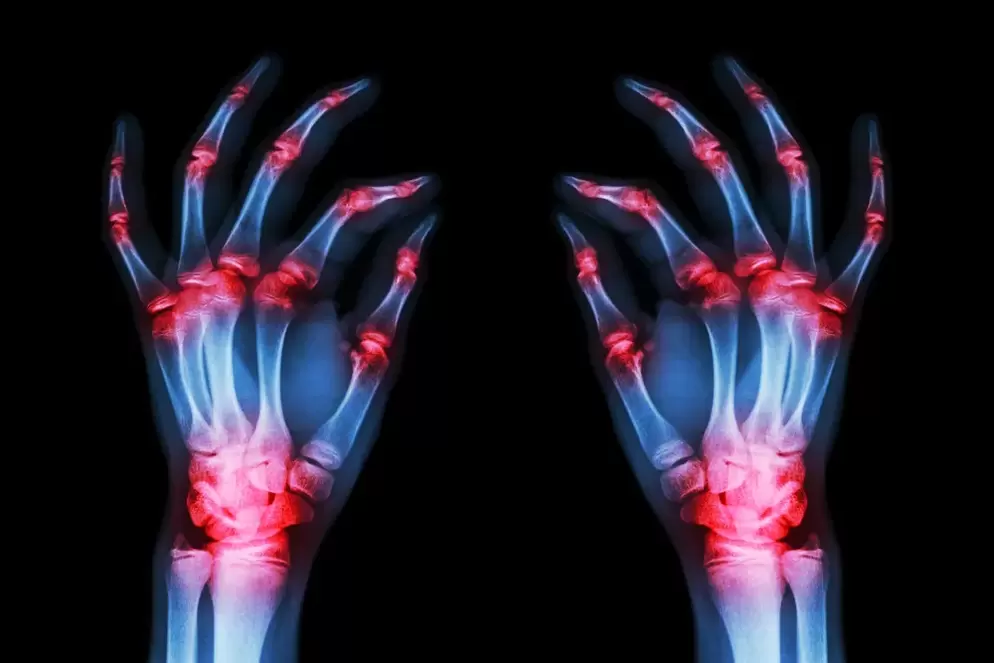
Arthritis is a chronic degenerative disease that affects all parts of the joint: cartilage, synovial membrane, ligaments, capsule, peri-articular bones and peri-articular muscles and ligaments.
According to European doctors, arthropathy is responsible for almost 70% of all rheumatic diseases.People aged 40-60 years are more susceptible to arthrosis of the joints.This is facilitated by both lack of movement and prolonged overload, poor nutrition and, of course, injuries.
What is articulation?
Typically, a human joint consists of 2 or more connecting bones.All working surfaces of the joint have a protective coating and are continuously lubricated with synovial fluid for better gliding.The joint cavity itself is hermetically sealed by the joint capsule.
In our body, there are many joints that are "responsible" for certain types of movements, can bear various loads and have different safety margins.
The amount of movement at the joints depends on the structure of the joint, the ligamentous apparatus that limits and strengthens the joint, and the various muscles that are attached to the bones by tendons.
Causes of arthropathy of the joints
The normal functioning of the joint is possible with continuous self-renewal of the cartilage tissue.At a young age, the rate of death of outdated joint cells is equal to the rate of birth of new cells.Over the years, the process of cell renewal slows down and the cartilage tissue begins to thin.Synovial fluid production also decreases.As a result, the articular cartilage begins to thin and break down, leading to joints.
In addition, there are other causes of arthrosis of the joints:
- increased physical activity.Arthritis of the joints is a frequent accompaniment of excess weight.As a result of overloading, microtraumas are formed in the joints.Athletes experience joint damage due to increased loads on "unheated" joints.
- joint injuries;
- congenital or acquired deformities of the musculoskeletal system (rickets, kyphosis, scoliosis, improper bone fusion after injuries with the appearance of limb deformities: O- and X-shaped leg deformities).
Arthritis stages
Depending on the degree of destruction of the cartilaginous tissue, different stages or degrees of articulation are distinguished.
Arthritis grades and symptoms
- 1st degree arthropathy is characterized by periodic pain in the joints, especially with increased physical activity.After rest, the pain usually goes away.The range of motion in the joint is not limited, the muscle strength in the injured limb does not change.X-rays can show minimal signs of joint damage.
- Arthropathy of the 2nd degree is manifested by painful sensations not only with intense physical stress, but also with light loads.Even with rest, joint pain may not go away.This degree is characterized by stiffness in movements and limited mobility in the joints.This eventually leads to muscle atrophy.An X-ray can show joint deformity, a narrowing of the joint space, and the appearance of bony growths near this space.
- Arthritis of the 3rd degree - any movement causes a person great pain.The joint pain is present even at rest.Therefore, a person tries to move as little as possible, so that the pain is minimal.In some cases, movement requires the use of crutches or a walker.Sometimes bone fusion occurs - ankylosis (as in ankylosing spondylitis).
With deforming arthropathy, irreversible changes occur in the cartilage tissue of the joint, and its functions and structure are completely disrupted.Deformative arthropathy of the joints is based on the occurrence of dysfunction in the formation of hyaline cartilage and synovial fluid.
Diagnosis of joints of the joint
The main method for diagnosing joints is radiography.With arthropathy, changes in the joints, abnormal joint surfaces and narrowing of the joint space can be seen.
Which joints are most likely to suffer from arthrosis?
The joints of the extremities most susceptible to arthropathy are the hips, knees, shoulders, elbows and hands.
With arthropathy of the hip joint, a person may first feel slight discomfort in the legs after running or walking.Over time, the pain intensifies, there is limitation and stiffness in movement.With stage 3 disease, the patient protects his foot and tries, if possible, not to step on it.
Osteoarthritis of the knee joint manifests itself as pain in the knee joint after bending and straightening the legs.The most common cause of knee osteoarthritis is past injuries.As a result of these injuries, the sliding of the articular surfaces is disturbed and their rapid wear occurs.In some cases, the joint may gradually lose its mobility.
Arthritis of the ankle joint manifests itself in the form of swelling and pain in the ankle of the foot.The cause of arthrosis of the ankle joint can be: deformities, ankle and ankle fractures, dislocations, flat feet, chronic injuries of the ankle joint in athletes and ballerinas.By the way, they often have arthrosis of the foot.
Arthropathy of the shoulder, elbow and wrist joints occurs most often as a result of injuries, bruises, dislocations and intra-articular fractures.Shoulder joint arthropathy is characterized by pressing, aching, dull pain that radiates to the forearm and hand.The pain occurs more often at night.With arthropathy of the hands, the pain is accompanied by dysfunction of the hand.
Treatment of arthritis
The main means of treating arthropathy are drug therapy, the use of physiotherapy and surgical treatment.
Pharmaceutical treatment
The use of drugs helps to improve blood circulation in damaged joints, restore the properties of cartilage and has an analgesic and anti-inflammatory effect.
Non-steroidal anti-inflammatory drugs
With arthropathy, swelling of the joint may occur, the joint begins to hurt, and the range of motion is reduced.When taking anti-inflammatory drugs (NSAIDs), pain is reduced, the inflammatory chain reaction is interrupted and the cartilage repair process is accelerated.
Medicines can be used in the form of tablets, rectal suppositories and powder.But remember that self-medication is unacceptable.the choice and dosage of the drug for arthropathy is carried out by a rheumatologist.
Centrally acting painkillers
Opioid drugs lower the patient's pain threshold.Such drugs can be taken strictly according to prescription and only under the supervision of a doctor!
Chondroprotective drugs
Cartilage protective drugs are building blocks of the cartilage itself, so they actively restore this tissue and prevent its further destruction.The treatment is effective in the initial stages of the disease.When the joint is already completely destroyed, it is not possible for the deformed bones to return to their original shape or for new cartilage to grow.
However, in stages 1-2 of arthropathy, chondroprotectants can provide significant relief to the patient.Combined formulations, including both glucosamine and chondroitin sulfate, give better results compared to a single-ingredient formulation.
Chondroitin sulfate and glucosamine sulfate
These drugs help slow the inflammatory response in the tissues, help reduce cartilage damage, and reduce pain.Most often, these 2 drugs are used together in treatment, as they have a cumulative effect, but they must be taken for 3-6 months.
Hyaluronic acid
Provides viscosity and elasticity of synovial fluid.It helps the joints slide well.Therefore, doctors often prescribe injections of hyaluronic acid into the affected joint.
Physiotherapy treatments
Physiotherapy treatments may include:
- UHF therapy?
- magnetic therapy;
- low intensity laser radiation.
- drug electrophoresis;
- phonophoresis (using ultrasound to introduce a drug to the site of inflammation);
Surgical treatment
Surgical treatment is used to restore and improve joint mobility, as well as to remove part of the cartilage or damaged menisci.
Surgical treatment of arthropathy is resorted to in extreme cases, when medication does not produce results, when there is severe pain, partial or complete immobility in the joints.
During arthroscopic surgery, it is possible to remove part of the cartilage affected by arthropathy, polish it to give a smooth surface, remove cartilage fragments and growths, and cut out part of the damaged ligaments.
Knee replacement
With this operation, the articular surfaces of the knee joint are replaced with metal or combined prostheses.The prepared plates replicate the surface of the articular cartilage.Such prostheses are made of special alloys.they do not cause a rejection reaction in patients, do not oxidize and do not injure the surrounding tissues.
Hip joint surgery
During this operation, a partial removal of the cartilage and bone tissue of the pelvis and femur is performed.Typically, the femoral head and the articular surface of the pelvic bone are removed and replaced with a metal or metal-ceramic prosthesis.
Nutrition for joints
Excess body weight is a great enemy of your joints.Most patients suffering from hip and knee arthritis are overweight.
Therefore, for arthropathy, a properly selected diet is recommended.It is believed that jellied meat prepared in cartilage broth is beneficial for arthritis.It contains a lot of collagen and cartilage structural components, which help to restore cartilage tissue.
Dairy products, protein and calcium are beneficial.Animal protein is found in lean meats and fish, while plant protein is found in buckwheat porridge, beans and lentils.Boiled, stewed and steamed dishes are very healthy.
The best diet for joints is a diet with a slight predominance of carbohydrates (preferably complex carbohydrates), fruits and vegetables and sufficient protein and calcium.
Prevention of arthritis
Arthritis prevention, no matter how trivial, lies in a healthy lifestyle.If possible, try to be in the fresh air, move, walk barefoot on the sand, on the green grass and only on the ground.This type of walking improves muscle function and increases blood circulation in the legs.
Using physical therapy with various arm and leg swings, twists, and bends will provide feasible support to your joints.
Patients often ask if alternative treatment for arthropathy is possible?Yes, folk remedies can help in the initial stages of the disease, reduce pain and improve the general condition of the patient.But it does not replace following your doctor's instructions.